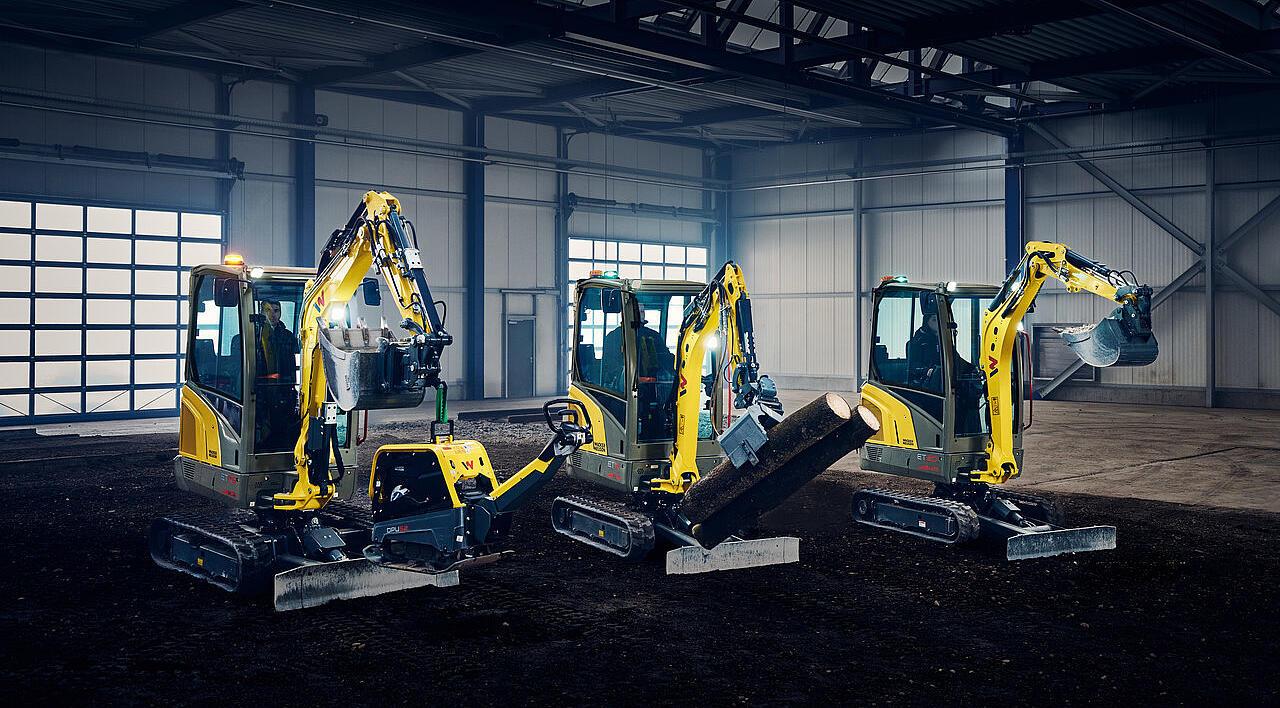
mini excavators in a row in industry hall

How many kilograms can a mini-excavator lift?

Mini-excavators are true all-rounders on construction sites – but when it comes to lifting loads, the crucial question quickly arises: How many kilograms can a mini-excavator actually lift?

There is no one-size-fits-all answer, as lift capacity depends on several factors—primarily the machine’s size, its standard components or standard equipment, and the ground conditions.
Why lift capacity isn’t always the same

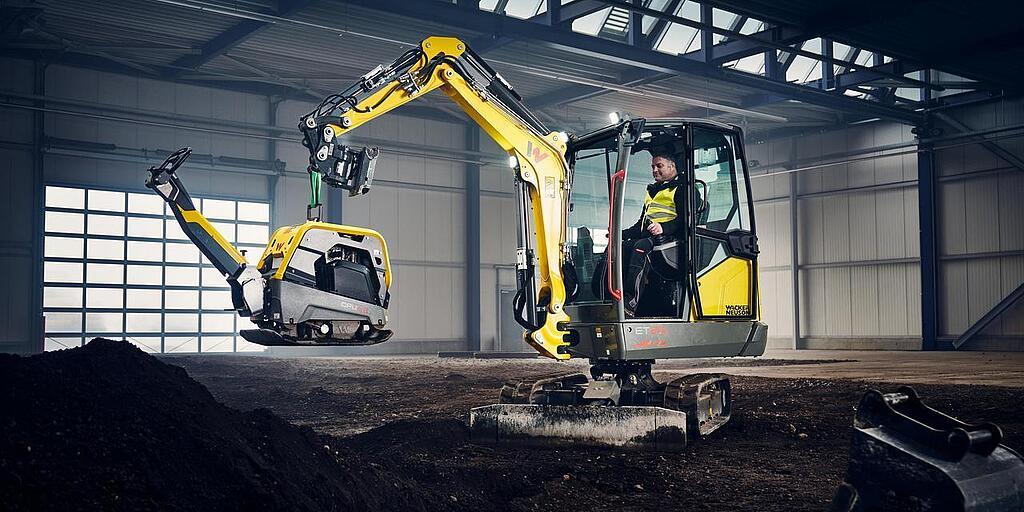
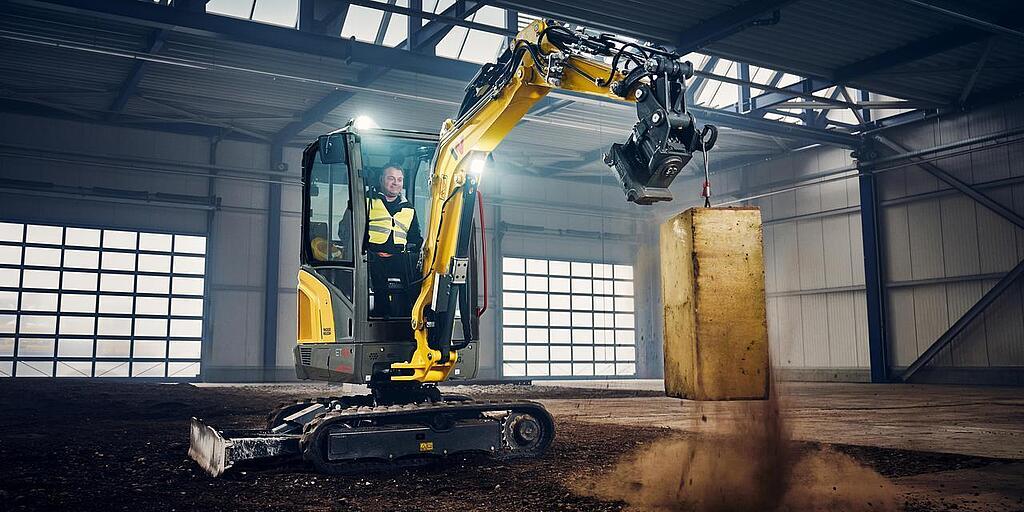
A mini-excavator does not lift the same amount in every situation. The farther the load is from the pivot point, the greater the leverage—and the sooner the machine reaches its stability limit. This is precisely why manufacturers like Wacker Neuson usually specify the permissible lift capacity based on lift height and boom position.

mini excavator in action in industry hall

A rough guide to lift capacity

As a rule of thumb: The larger the mini-excavator (operating weight), the higher the possible load capacity—depending on the model and operating conditions. 

Since lifting capacities vary significantly by model, it’s worth checking the lifting capacity tables: Here you’ll find an overview of all Wacker Neuson mini-excavator models—including lifting capacity tables. For example, Wacker Neuson’s smallest mini-excavator, the ET08, can lift approximately half a ton.

mini excavator in action in industry hall

Factors that influence lift capacity

The following factors are particularly important for a mini-excavator to lift safely:

  • Transmission range / boom position: Greater distance = less lift capacity
  • Subbase: Stability decreases on soft or uneven ground
  • Attachments and standard components or standard equipment: Different attachments and standard components or standard equipment alter weight and geometry
  • Additional weight and stabilizers: Some configurations improve stability
  • Manufacturer specifications (lifting capacity table): Critical for determining permissible values

In frequently changing operating conditions, additional equipment options can be just as crucial as lift capacity—as is the case with the ET18, ET20, and ET25 mini-excavators from Wacker Neuson, which are available with many factory-installed features designed for Productivity, comfort, and safety.

Conclusion: Always check the technical data

Depending on its size and the situation, a mini-excavator can lift anything from a few hundred kilograms to several tons—but only within the limits approved by the manufacturer. Therefore, for safe lifting, always check the lifting capacity tables and the exact standard components or standard equipment, especially when working in confined spaces or with side swing.

FAQs

  • On average, how many kilograms can a mini-excavator lift?
    That depends heavily on the size and model. As a rough guide, many mini-excavators can lift anywhere from a few hundred kilograms to several tons, depending on the application and transmission range.
  • Why does a mini-excavator lift less at a greater transmission range?
    The farther the load is from the pivot point, the greater the leverage. This reduces the permissible load capacity because the machine reaches its stability limit more quickly.
  • Where can I find the exact lift capacity of my mini-excavator?
    The exact values are listed in the manufacturer’s lifting capacity table. It specifies which load is permissible at which transmission range and boom position.
  • Do attachments affect the lift capacity?
    Yes. Quick coupler systems, grapples, or other attachments alter the weight and center of gravity. This can reduce the permissible lift capacity—especially at greater outreach.
Contact Contact

Contact

Phone number: +49 800 7831 850

Free hotline