concrete consolidation with an internal vibrator in action

Concrete consolidation with internal vibrators – professional tips for maximum strength and perfect surfaces

Concrete is the foundation of modern structures, though it is only through the right compaction that a reliable, durable, and visually attractive result is achieved. Internal vibrators are therefore the most important tool to remove trapped air and provide uniform compaction to the concrete mass.

Here you will discover why concrete consolidation is so crucial, how to correctly use an internal vibrator, and the professional tips you should really pay attention to.
Why concrete compaction is so important

Fresh concrete doesn’t behave like water, which independently fills all empty space. Rather, it contains air voids and cavities, which would remain in the material without compaction.

  • Strength: Consolidated concrete has a higher pressure resistance and an improved connection to the reinforcement.
  • Durability: Fewer voids mean better protection against water, frost, and corrosion.
  • Optics: Particularly with exposed concrete, a smooth, uniform surface is achieved.

Using internal vibrators correctly

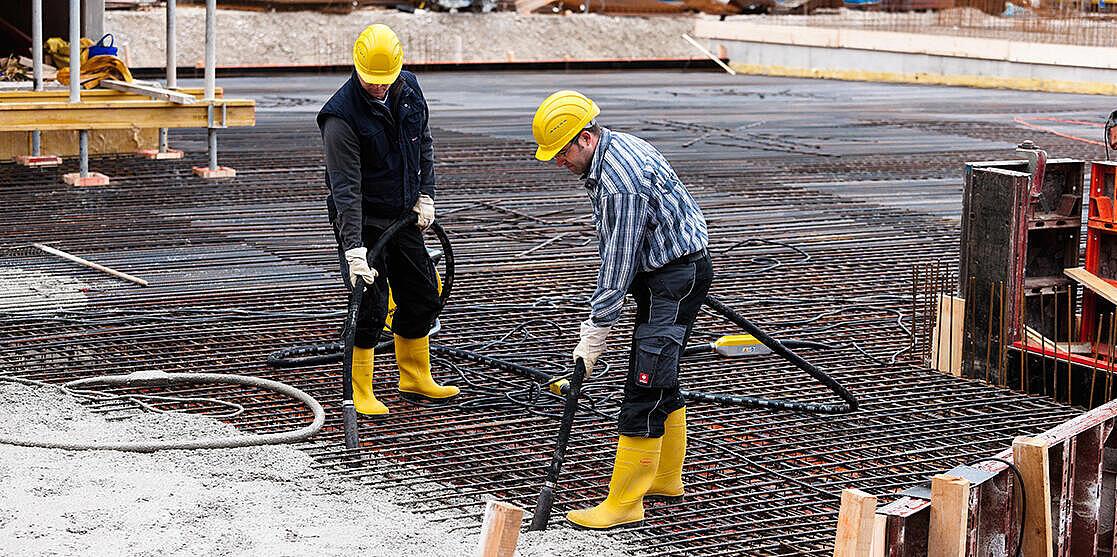
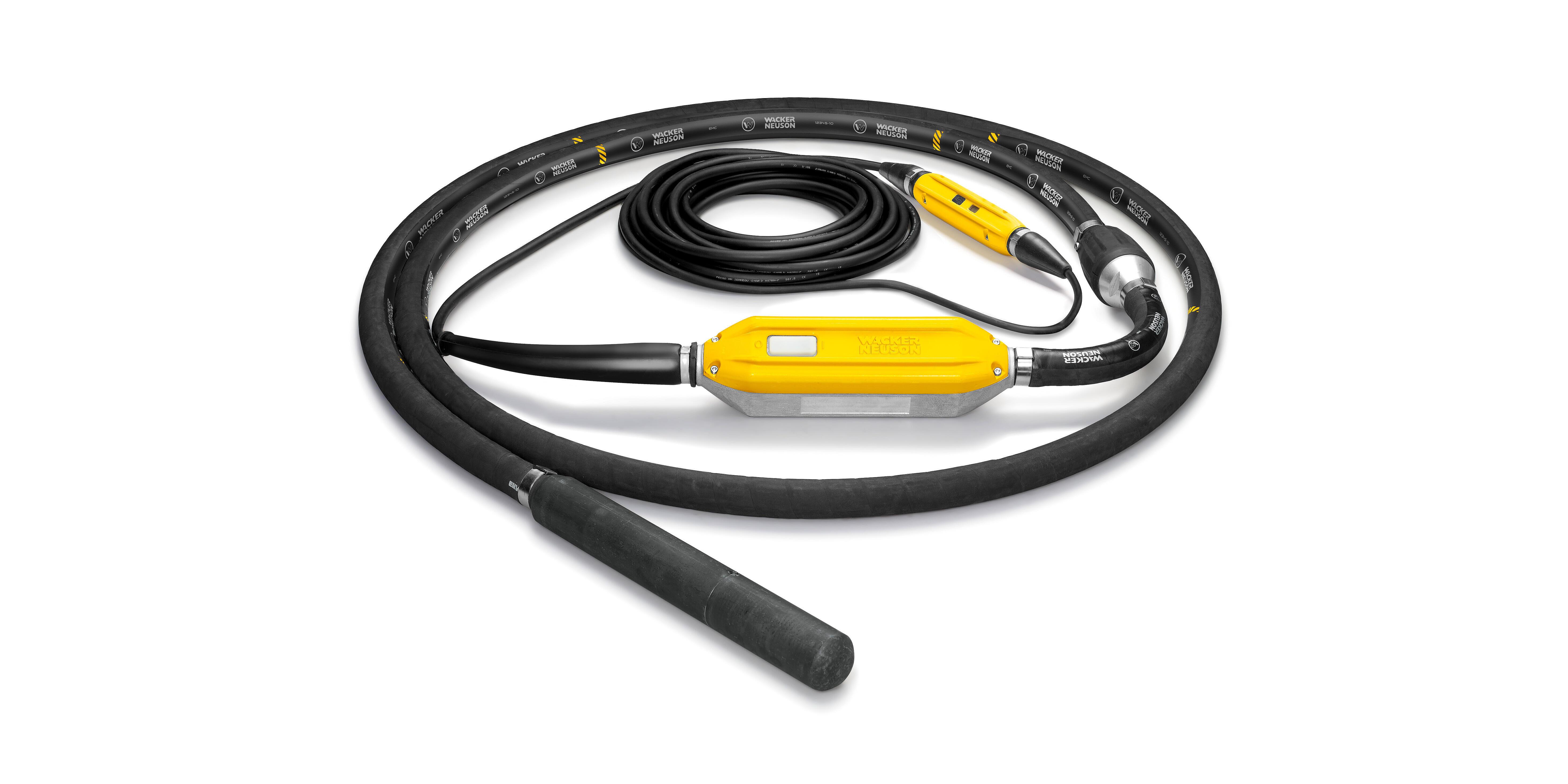
Internal vibrators work in accordance with a simple yet effective principle. The vibrator head is submerged into the fresh concrete. Through high-frequency vibrations (approx. 200 Hz), the concrete becomes a liquid for a short time, air bubbles rise, and cavities are closed up. After a few seconds, the concrete stabilizes again – but now denser, more homogeneous, and firmer.

Here you can see how exactly concrete consolidation works with internal vibrators:

Contrary to this, external vibrators transfer their vibrations via the formwork, which is especially common in prefabrication plants. On construction sites, the internal vibrator is more flexible and easier to handle.

Preparation for successful concrete compaction

The key to success is in the right preparation:

Checklist for optimum results:

  1. Clean the formwork: Remove residual concrete, nails, and dirt.
  2. Align the formwork uniformly: Uniform slotting patterns prevent unattractive joints.
  3. Use release agents correctly: This prevents concrete from adhering to the formwork—like “greasing” a baking tin.
  4. Test reinforcement: No contact between head and reinforcement to prevent damages.

Tip: A clean reinforcement saves a lot of extra work later during stripping the formwork and grinding.

The correct work technique: Step-by-step instructions

For compaction to be successful, the following points are very important:

  • Fill the concrete in layers: Every layer should be max. 50 cm high.
  • Compact until the bubbles stop: Use the machine until no more air bubbles rise up and the immersion noise stops changing. This is a sign that the concrete is completely consolidated.
  • “Stitch” the layers: When compacting the next layer, immerse the vibrator 5–10 cm into the layer below to create a clean link.

This example shows that too many air bubbles are still rising and compaction must continue.

Tip: Wacker Neuson’s internal vibrators have yellow markings every 50 cm on the protective hose – this is ideal for monitoring depth when working.

Professional tips: Using the internal vibrator correctly

  • Insert vertically, never at an angle.
  • Uniformly change the immersion points, about every 8–10 x head diameter.
  • Do not vibrate for too long at one point to prevent segregation.
  • Correctly set the water-cement value: Too much water reduces the strength and causes cracks.

Selecting the right internal vibrator

You can find the right equipment for concrete compaction at Wacker Neuson. The product range includes various internal vibrators with different diameters of the vibrator head, beginning at 30 centimeters. Selection of the component size and reinforcement density is dependent on:

  • Head diameter: 30 mm for narrow formworks, 58 mm for larger components.
  • Protective hose length: Depending on the component, between 1.5, 3, and 5 m.
  • High-frequency equipment: For professional applications with integrated frequency converters.
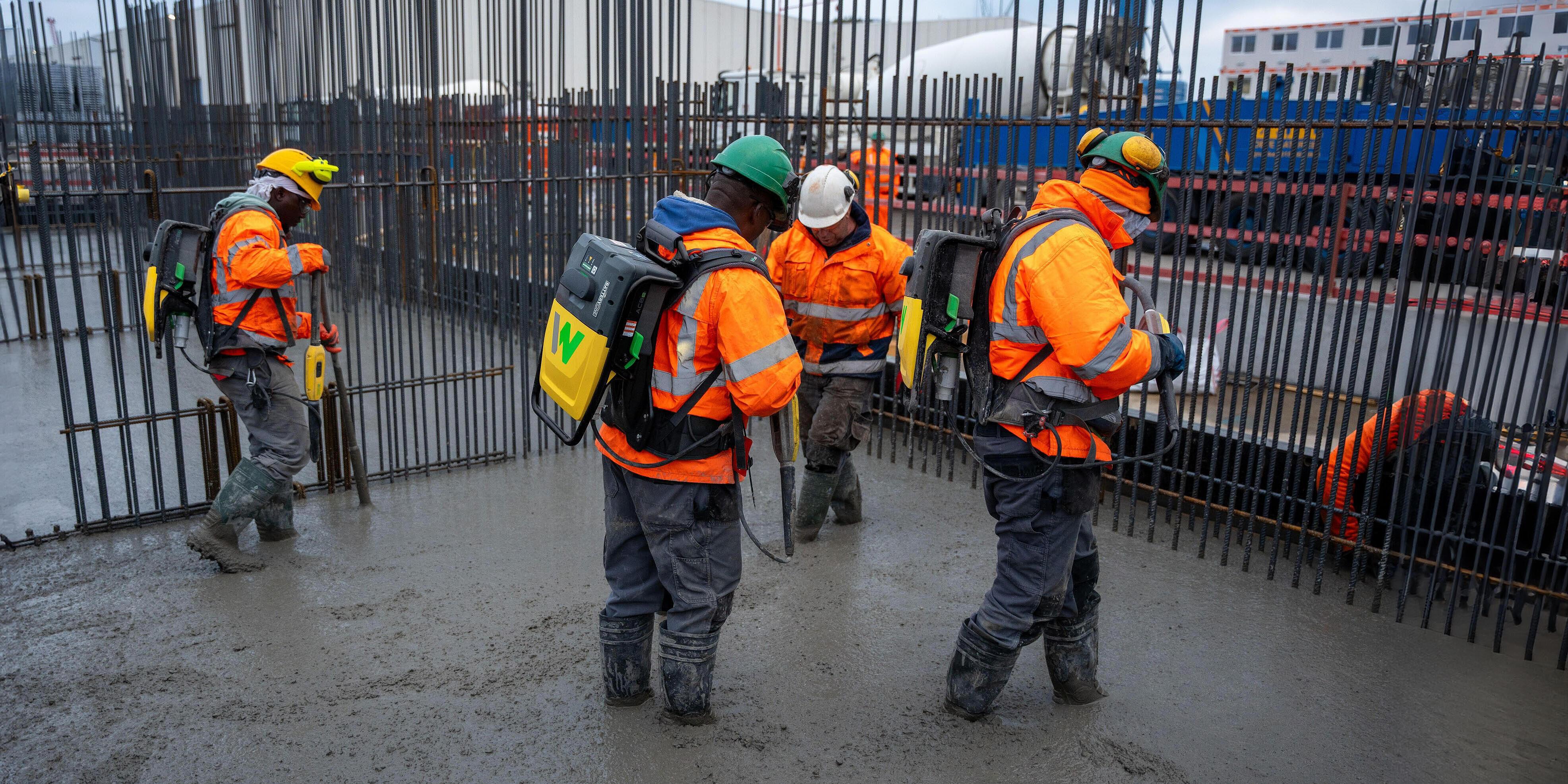
two workers consolidate concrete with Wacker Neuson internal vibrators
Wacker Neuson IRFUflex

Battery-powered internal vibrators for maximum flexibility

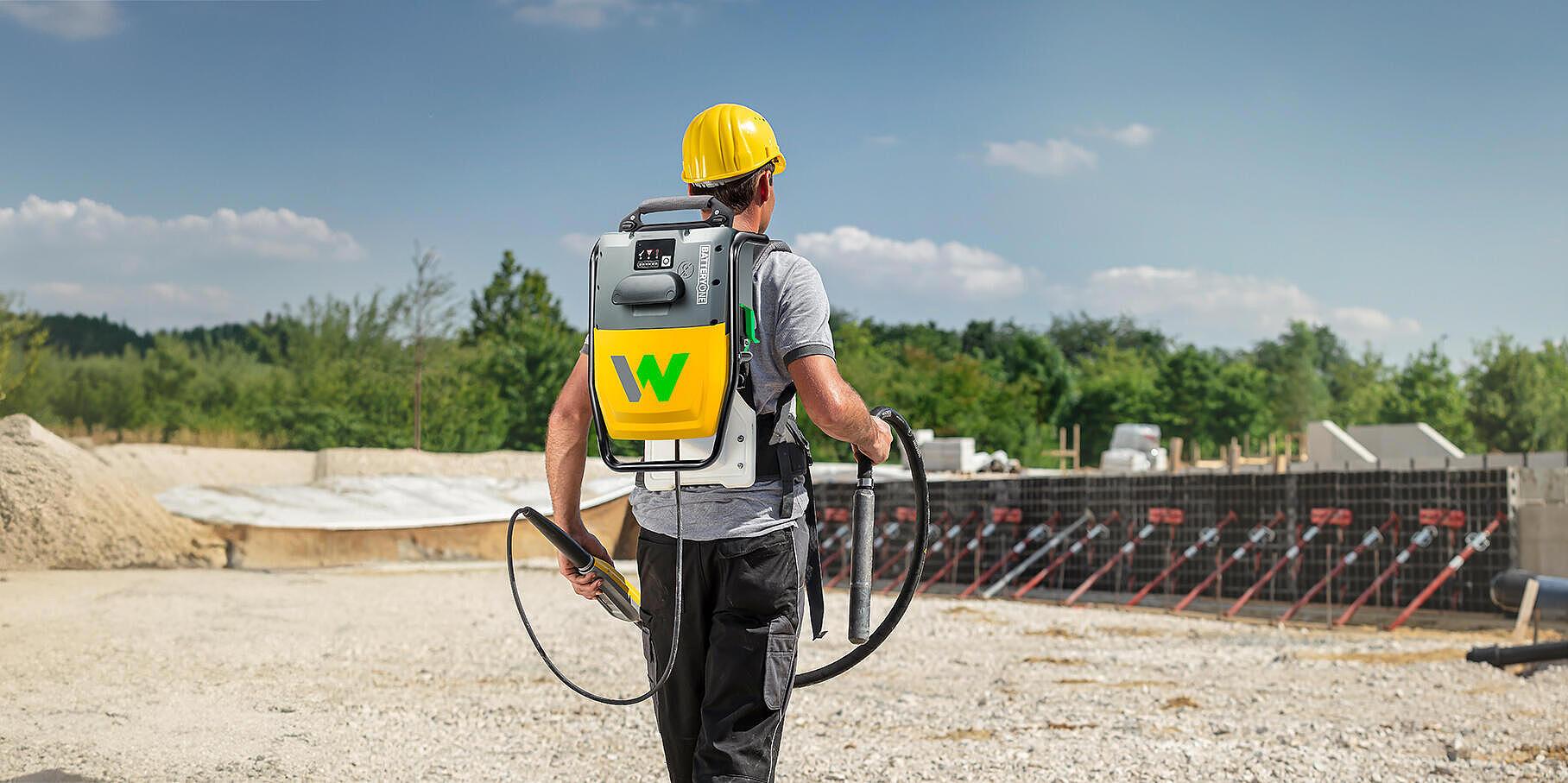
Battery-powered internal vibrators with a backpack system are particularly practical. The powerful lithium-ion battery is placed in a converter backpack (ACBe). This way, the operator can work even faster, more comfortably, and more safely – even if there isn’t a power connection nearby!

  • Time-saving: the battery is carried like a backpack. Thus, an external power source is no longer necessary, eliminating the need to move a converter: a real time-saving advantage.
  • Comfortable: the operators can move around freely, as they don’t have to pay attention to cables or protection hoses lying around.
  • Safe: no tripping hazards or safety risks from power cables in wet concrete.
  • Flexible: Three standard protection hose lengths (1.5, 3, and 5 meters) and vibrator heads in three different diameters (38, 45, and 58 mm) are available for selection.

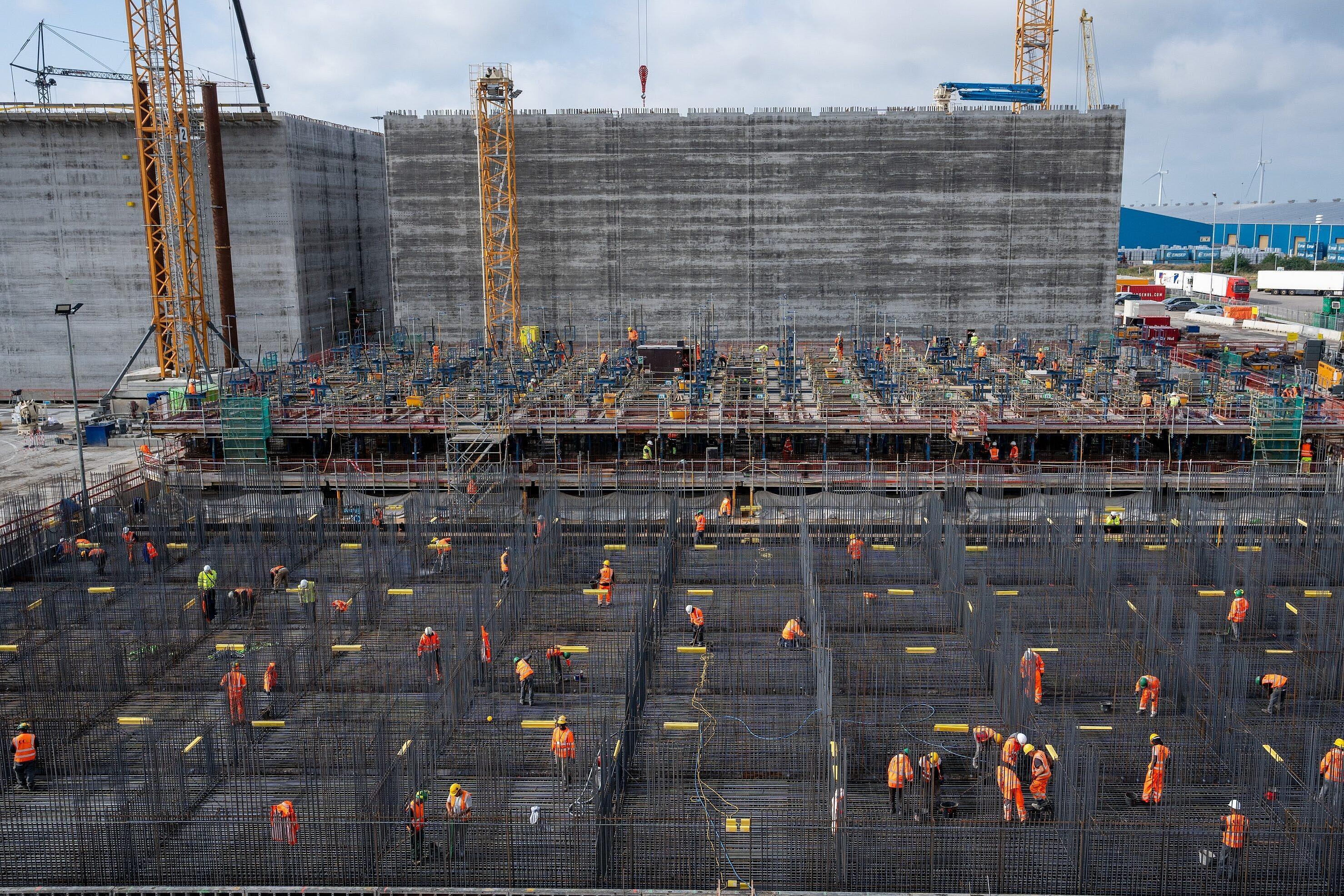
Practical example: Here you can find out more about the battery-powered internal vibrator in use: To the article “Wacker Neuson provides support in the construction of the world’s first energy island”

worker with an internal vibrator backback on a construction site
some workers consolidating concrete

Frequent errors when consolidating concrete (and how to prevent them)

Compaction time too short → air bubbles remain trapped.
Vibration too long → concrete segregates.
Incorrect insertion angle → uneven compaction.
Water content too high → cracks and porosity.

Solution: Work systematically with uniform intervals and pay attention to sound of the concrete – it audibly “calms” when it has been correctly compacted.

Contact Contact

Contact

Phone number: +49 800 7831 850

Free hotline