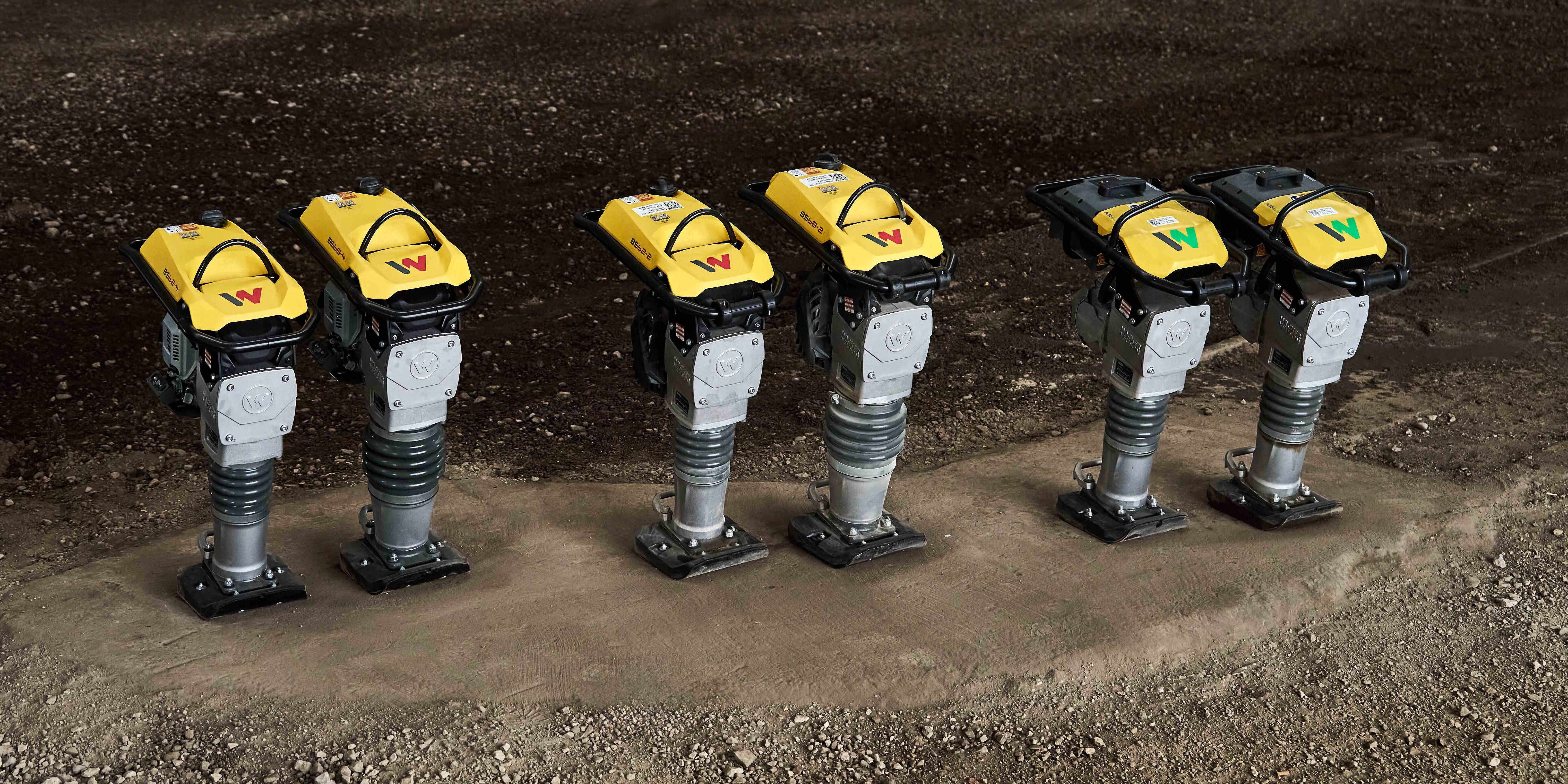
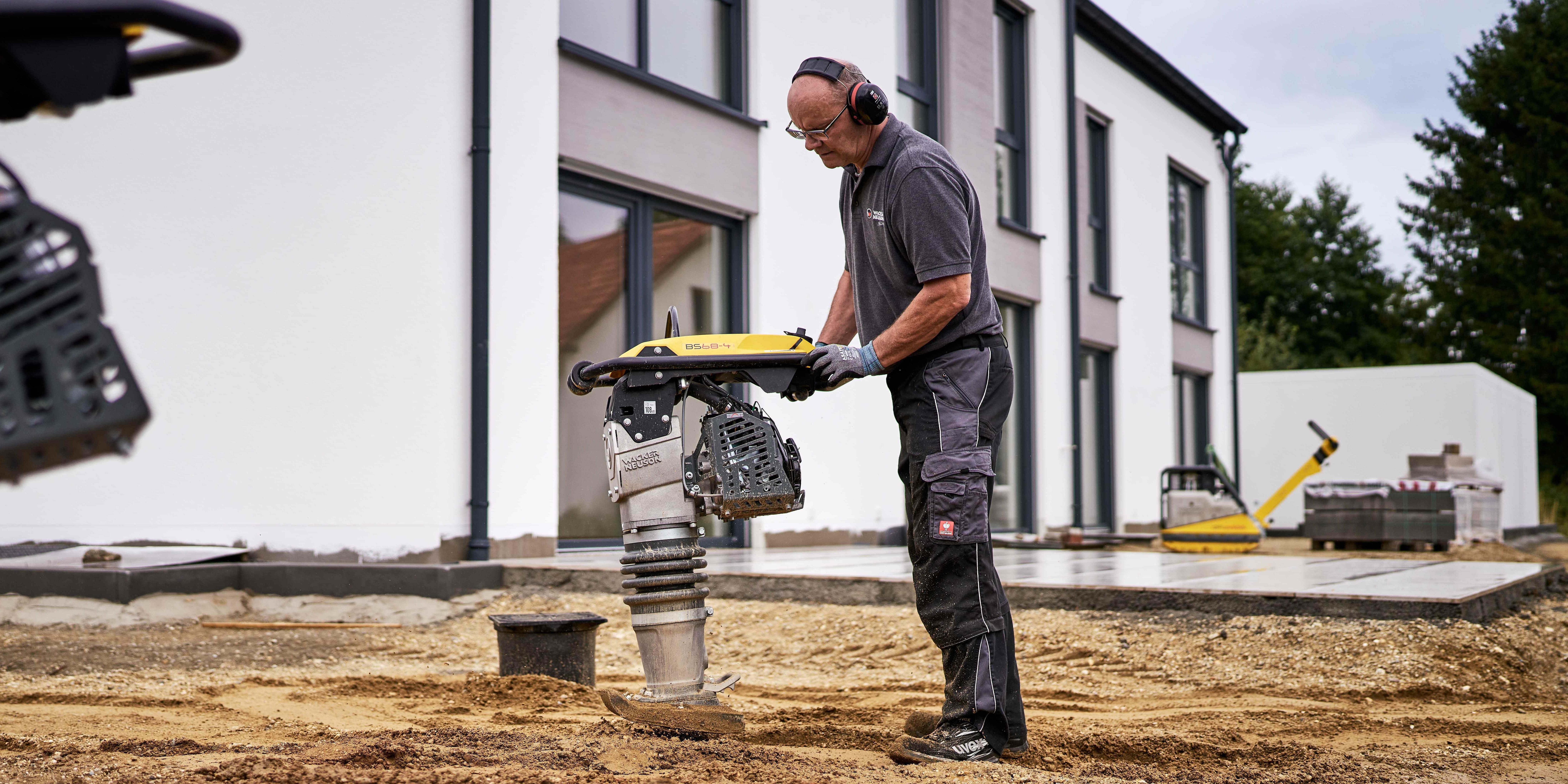
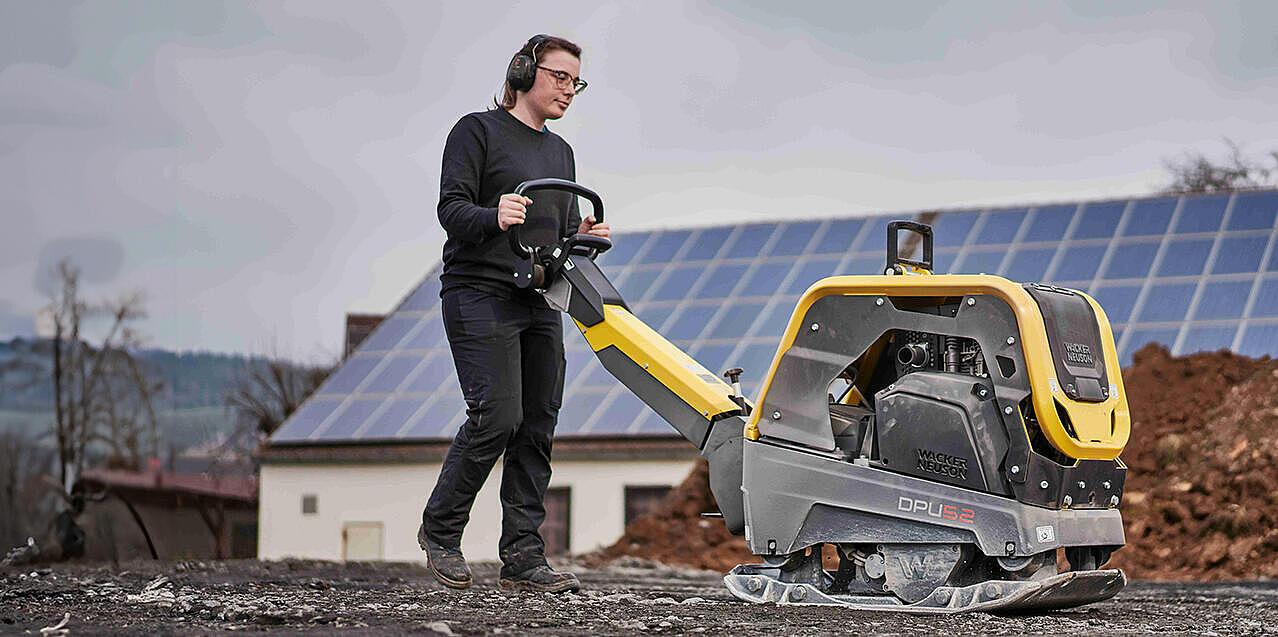
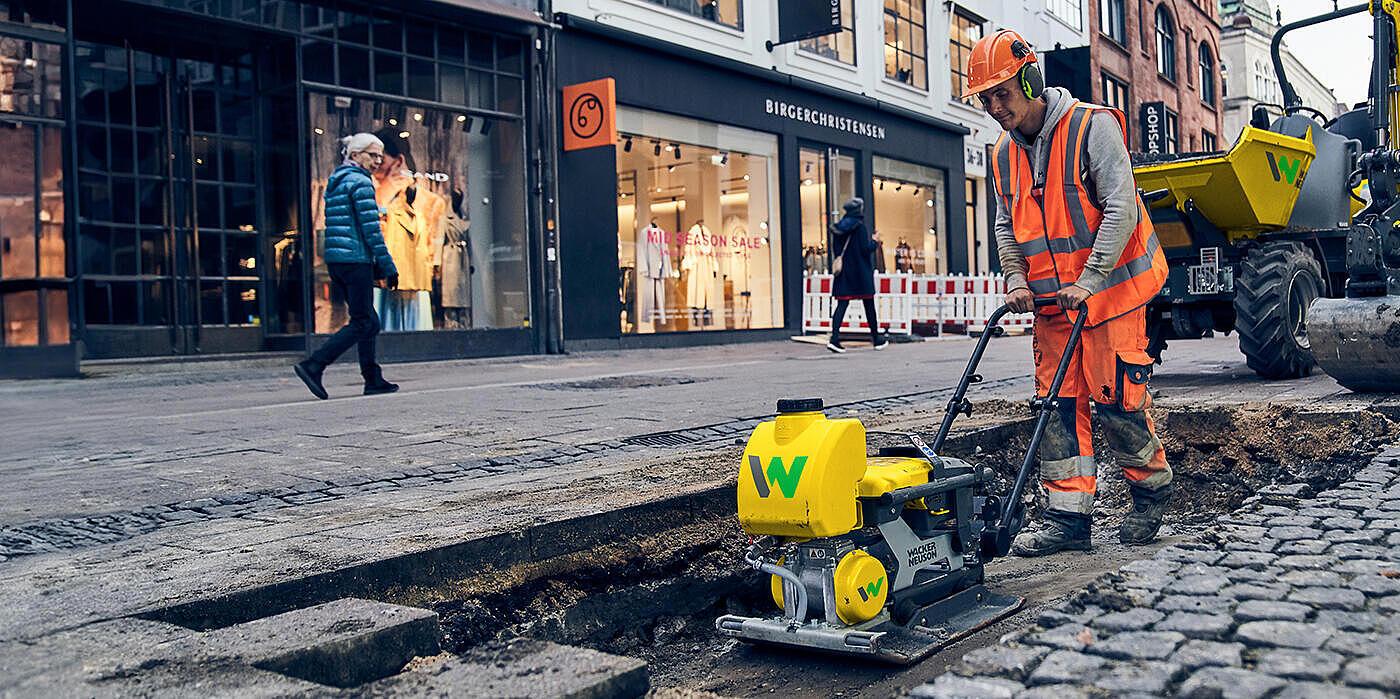
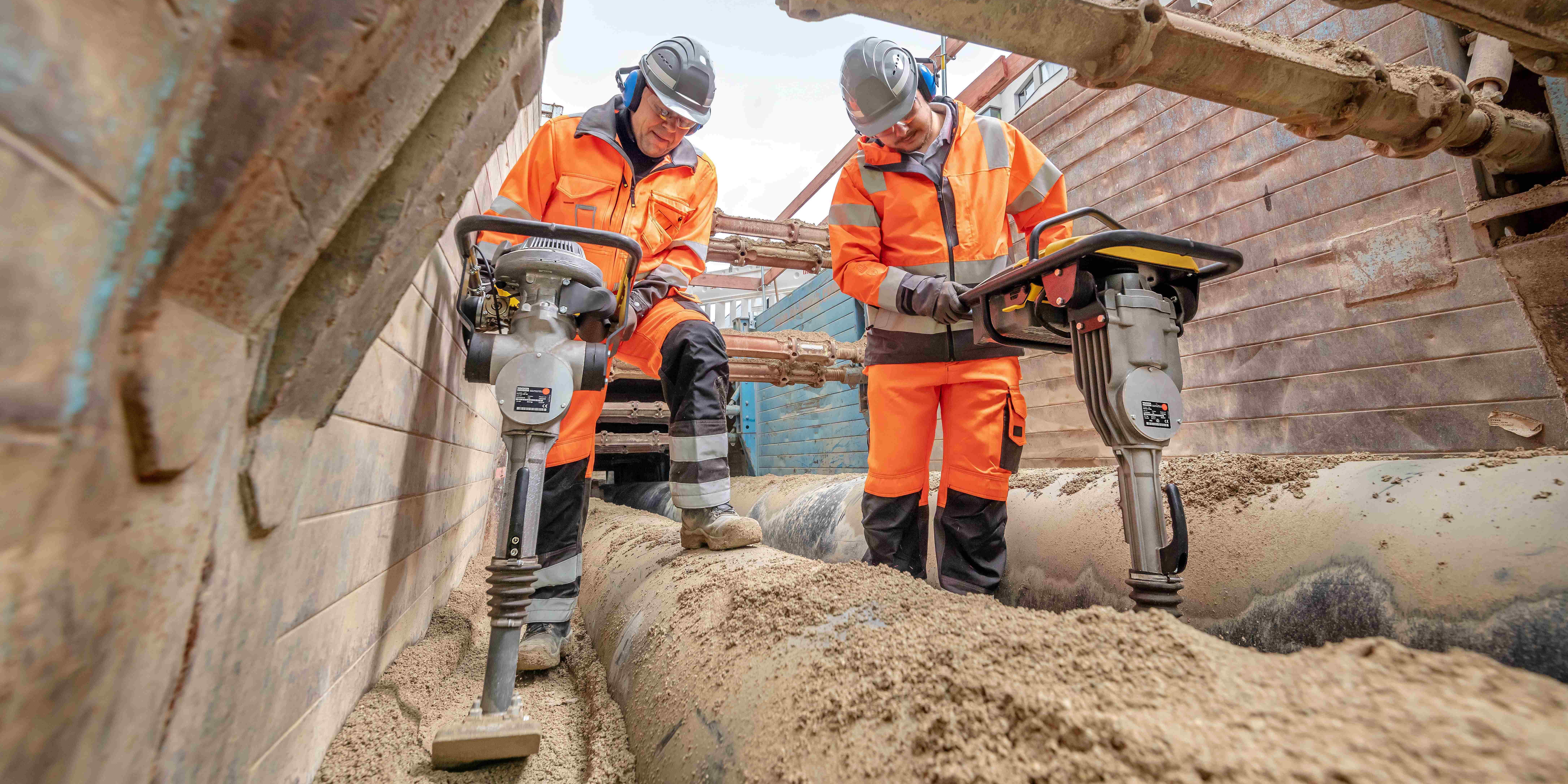
some rammers and vibratory plates from Wacker Neuson in action

Difference between a vibratory rammer and a vibratory plate – the best comparison for construction projects

When carrying out compaction works on a construction site, the question often arises: vibratory rammer or vibratory plate? Both machines provide a load-bearing sub-base, but both in different ways. In this article, you will find out where the differences lie, the benefits that each of the machines provide, and how to make the right choice for your construction project.

The operating mode of the vibratory rammer and the vibratory plate

Vibratory rammer - selective impact force for confined areas

A vibratory rammer works with powerful, vertical up and down movements. As a result, the ground is compacted using quick and selective movements. This technique is particularly well-suited for:

  • more difficult-to-reach areas like pipe trenches, building corners
  • cohesive soils like clay or loam
  • precise compaction works in the vicinity of foundations

Types of vibratory rammers:

  • Battery-powered rammers: work without local exhaust gas emissions and are ideal for all typical rammer works, in particular within interiors and poorly ventilated trenches.
  • Two-stroke rammers: Light, maneuverable and with particularly low emissions - a tried and tested technology, which is exclusively provided by Wacker Neuson.
  • Four-stroke and diesel rammers: These powerful models are heavy and excellently suited to coarse, mixed or moist grounds.
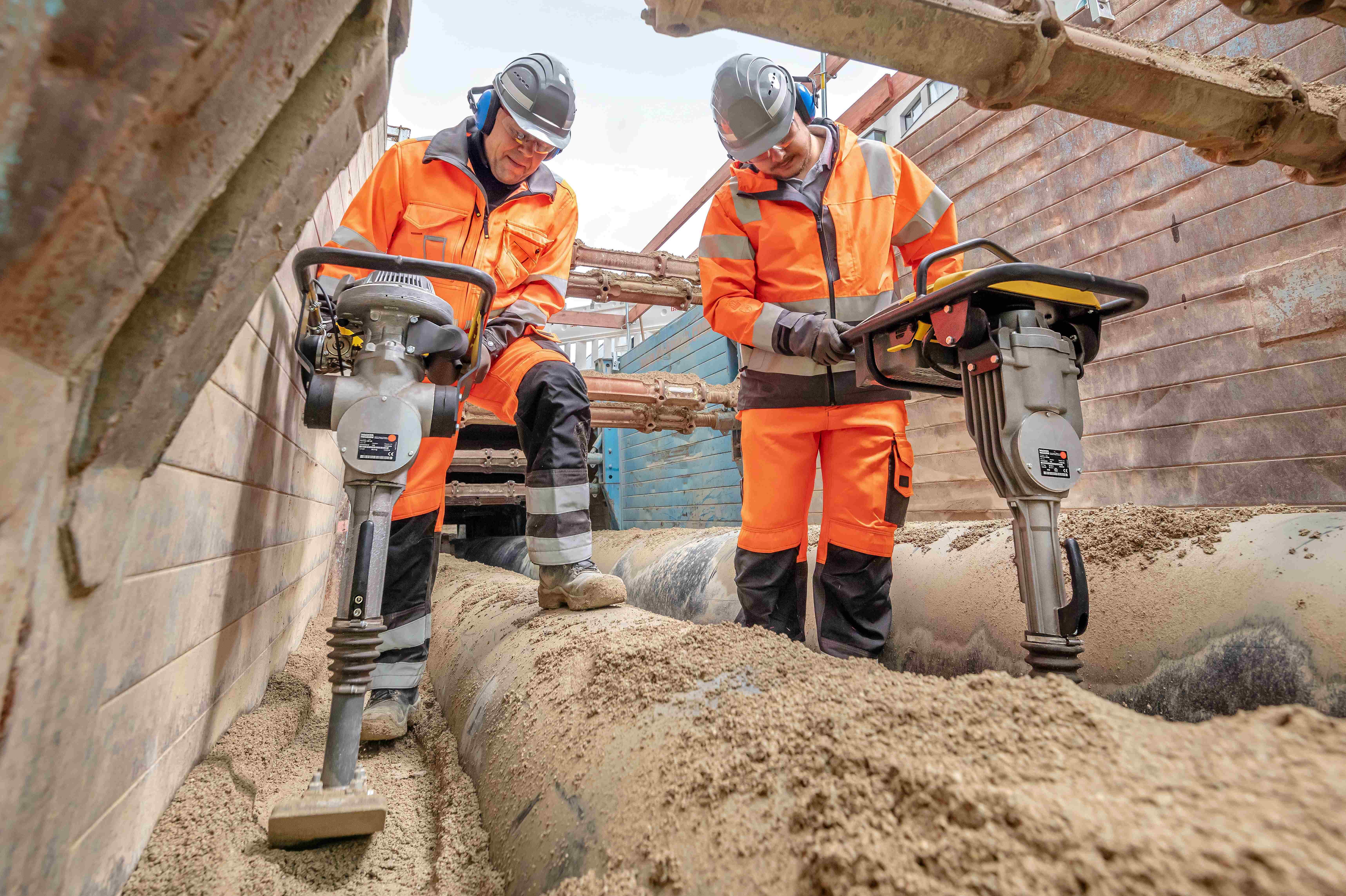
rammer BS30 and AS30e in action
vibratory rammer BS62 in action on construction site

Vibratory plate - compaction for the surface

The vibratory plate works over an area. It compacts the ground with the help of uniform vibrations and is ideal for larger, open spaces - for example, entrances, terraces, pathways or yard areas. It is particularly effective on non-cohesive or mixed grounds, such as sand, gravel or chippings.

Vibratory plate versions according to their drive system:

  • Battery-powered models: work free from emissions, ideal for inner cities with strict emission regulations, landscaping, tunnels or courtyards
  • Conventional vibratory plates with gasoline or diesel engine

Vibratory plate versions according to movement/handling type:

Vibratory plates according to weight classes:

vibratory plate DPU52 on construction site in action
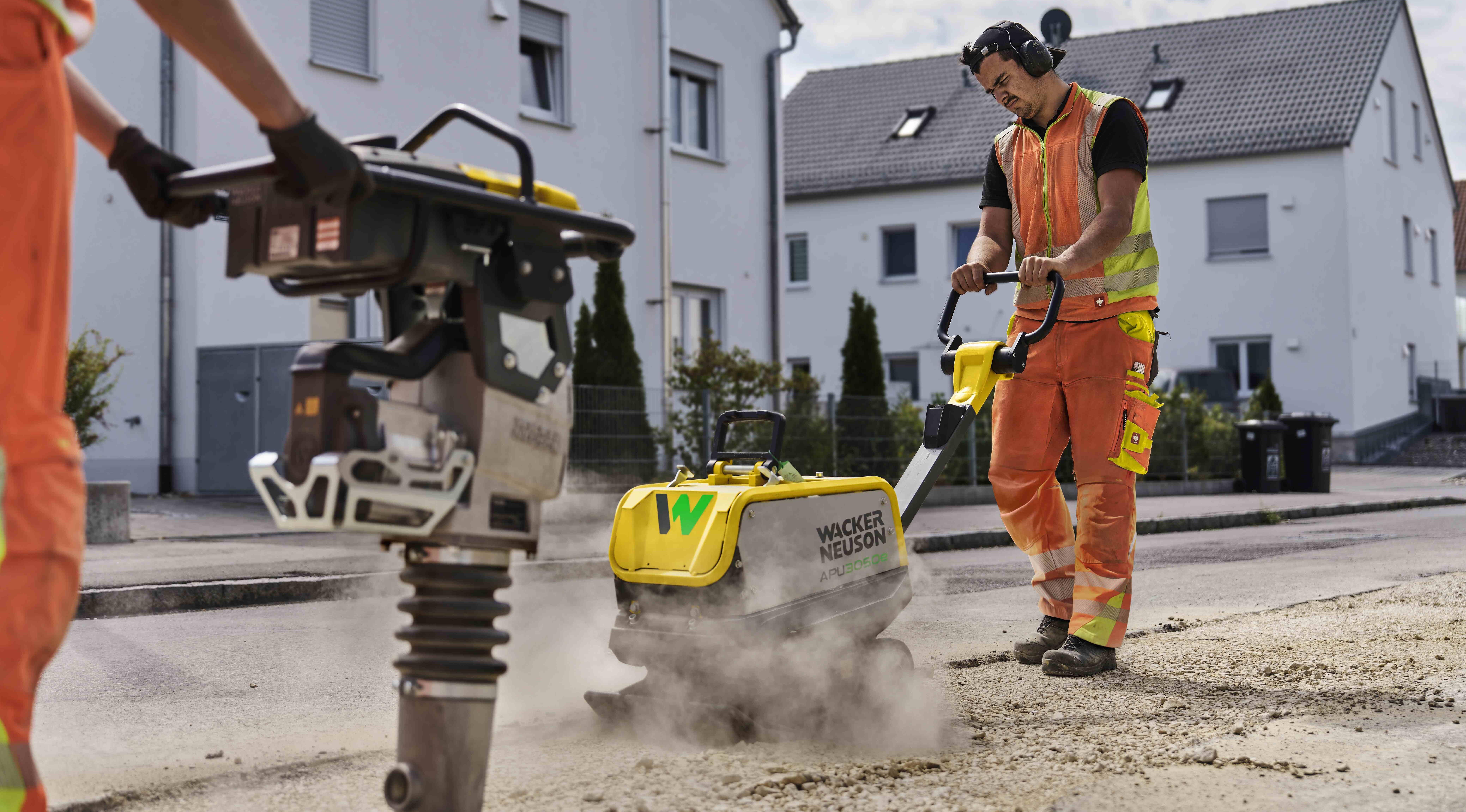
battery plate in innercity night construction site in action
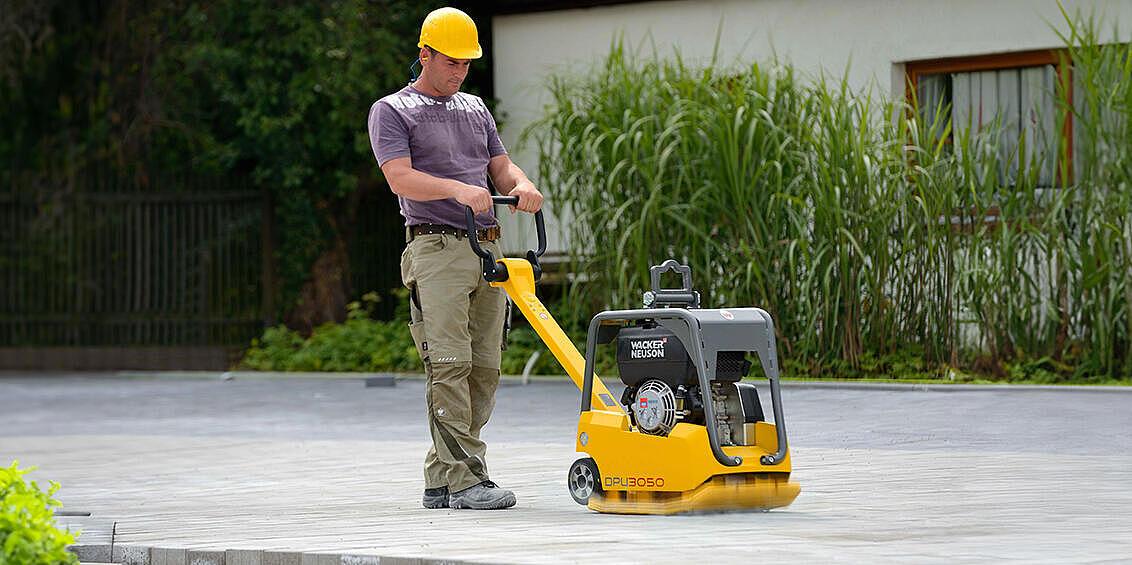
Wacker Neuson vibratory plate in action on paving stone
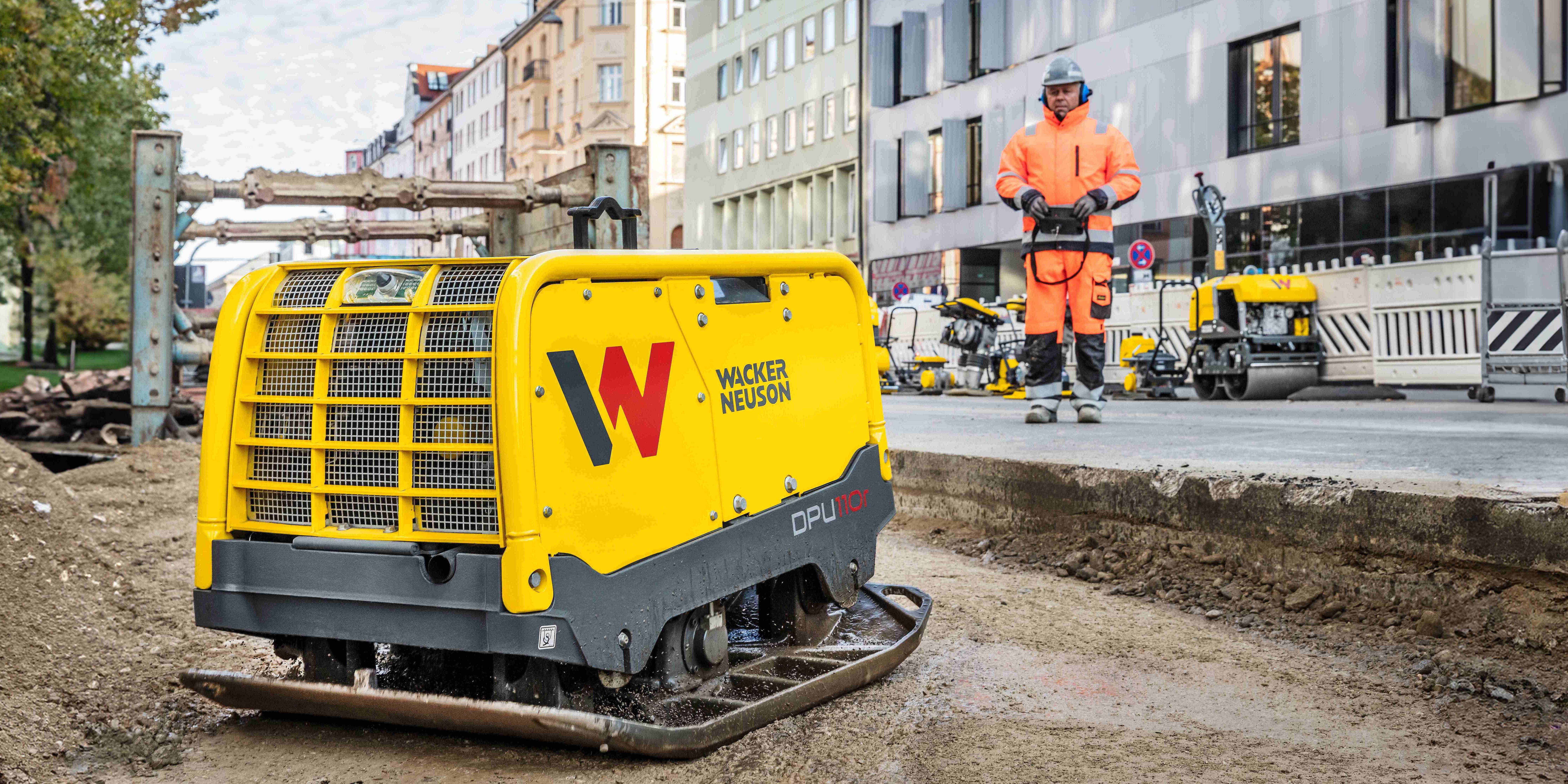
Heavy vibratory plate DPU110 in action

Which equipment is suitable for which type of soil?

The choice between a vibratory rammer and a vibratory plate is dependent on the soil characteristics and space provisions:

Vibratory rammer benefits:

  • Ideal for tight, contorted areas, such as trenches
  • Strong on cohesive soils such as clay
  • Enables precise compaction

Vibratory plate benefits:

  • Quick and efficient on large areas
  • Best suited to gritty, non-cohesive sub-bases, like sand, gravel, and chippings
  • Also for asphalt and paving works, where required with a rubber mat (paving pad) to protect sensitive surfaces

An overview of other differences

  • Mobility: Vibratory rammers are more compact and lighter - ideal for transportation and smaller construction sites.
  • Guidance: Vibratory plates can be more easily guided across longer distances.
  • Versatility: Vibratory rammers are used in areas where other machines reach their limits.
  • Efficiency: The vibratory plate is significantly faster and more uniform for compaction works over large areas.

Our tip: For those who work on different construction sites or with varying types of soil, should consider both types of equipment - this way you remain both flexible and efficient.

Frequently asked questions (FAQ)

1. What is the difference between a vibratory rammer and a vibratory plate?
The vibratory rammer works selectively with impact force; the vibratory plate works on surfaces with vibrations.

2. Which machine is better for small construction sites?
Depending on the application, either a vibratory rammer (it is compact, easily transportable, and ideal for confined spaces) or a compact, single-direction vibratory plate (it is user-friendly and has less hand-arm vibrations).

3. Can you vibrate the vibratory plate on paving stones without damaging them?
Yes, with the right rubber mat (paving pad) under the vibratory plate it is possible to protectively compact or vibrate on the paving stones. The mat protects the surface from scratches and ensures a uniformed result.

4. What machine is suitable for cohesive soils, like clay?
The vibratory rammer - due to its impact, it compacts loam and clay particularly well.

5. Are there battery-powered models?
Yes, there is a battery for both the vibratory rammers and the vibratory plates - emission-free and ideal for the inner-city, but also for poorly ventilated areas or sensitive environments.

6. What is more efficient in large areas?
Definitely the vibratory plate - it compacts both quickly and uniformly.
Contact Contact

Contact

Phone number: +49 800 7831 850

Free hotline